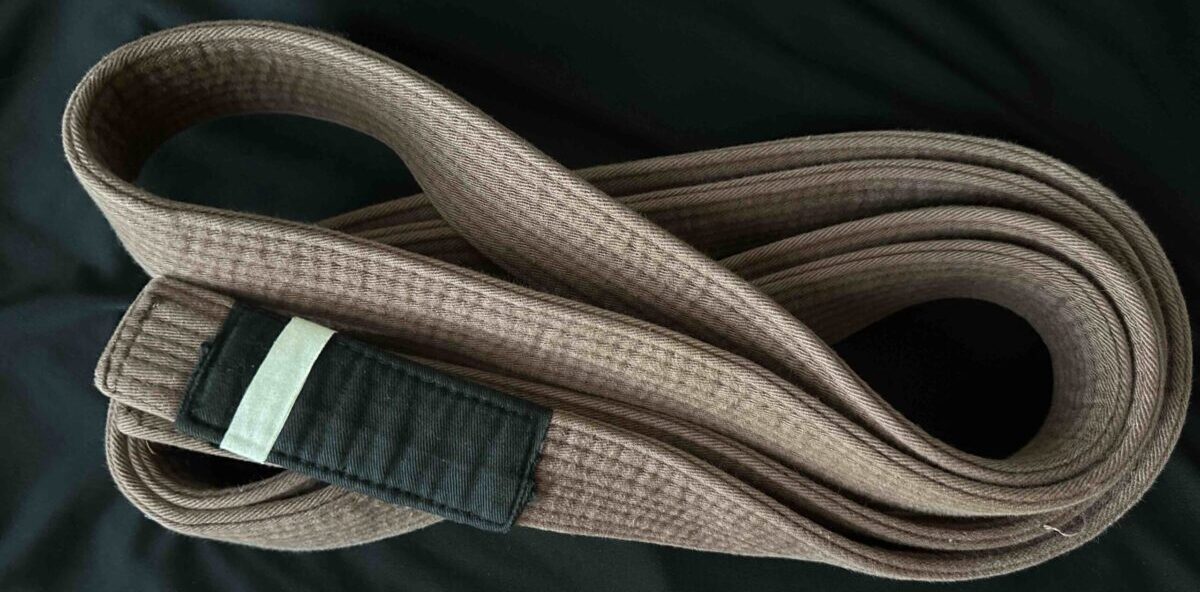
8 minute read
Here’s what I’ve been wrestling with: We’ve turned belts into the main event when they should be the footnote. If you’re showing up to the gym primarily for that next stripe or color change, you might be missing the whole point. But here’s the twist—maybe it’s okay to care about belts, maybe it’s okay to not care about them, and maybe, just maybe, it’s okay to say “thanks, but not yet” when one’s offered to you. This isn’t about gatekeeping or being elitist. It’s about being honest about why we train and what these pieces of colored fabric really mean to us.
What This Is Really About (TLDR for the Impatient)
- Belts mean different things to different people—and that’s fine
- Obsessing over your next promotion might be holding you back from actual growth
- Leaving a school just because you didn’t get promoted? You’re missing the point
- But staying at a school that promotes everyone with zero standards? That’s a problem too
- What if it was okay to say “thanks, but I’m not ready” to any belt?
- Students who accept belts they know they didn’t earn are part of the problem
- Your belt progression should match your personal journey—not someone else’s timeline
The Belt Conversation Nobody’s Having
Islam Makhachev dropped this gem a while back: “Who give him black belt…We HAVE to CHECK this…we have to cancel many black belt…they make jiujitsu look bad.”
Now look, Makhachev loves stirring the pot for MMA drama. But between you and me? There’s something worth discussing here. Neither Makhachev nor I have a black belt, which maybe lets us see the belt system differently. We’re not defending our own rank—just observing what’s happening in our sport.
So let’s talk about all belts, not just black ones. Who are they really for? The student? The school? The art itself?
The Celebrity Effect and the Fast-Track Problem
Okay, so celebrities are everywhere on the mats now—Ashton Kutcher, Keanu Reeves, Demi Lovato, Joe Rogan, Ed O’Neill, Tom Hardy, Guy Ritchie, Jason Statham, even Zuckerberg’s out there competing. And hey, that’s actually pretty cool for getting eyes on the sport!
But then I see stuff like this Instagram post—someone getting a black belt in 3.5 years. Most of us are grinding for 10+ years. But I guess if you’ve got the cash for private lessons…
Is it just me, or are we watching history repeat itself? When movies made certain martial arts popular back in the day, money rolled in, and suddenly you could buy your rank at a strip mall.
Are we heading down that same path?
What the Big Names Are Saying
Craig Jones flat out said it on More Plates More Dates: “It’s a marketing trick.”
And Danaher? Even more direct on Lex Fridman: “No one cares if you got a black belt. Just show up, pay your fees. Don’t set your goals low, okay? I know plenty of black belts that suck.”
When legends in the game are saying belts might not mean what we think they mean… maybe we should listen?
So What’s a Belt Supposed to Be?
Look, a belt means different things to different people. For some, it’s validation. For others, it’s a teaching credential. For many, it’s just a way to organize competition brackets.
But anyone who trains knows the difference when they roll with someone who truly embodies their rank versus someone who just… wears it. It’s more art than science, you know?
Here’s what I think it comes down to: What do your training partners expect when they see your belt? And more importantly—why do YOU care about that belt?
Are you here for the journey or the destination?
Growing Into Your Belt (A Personal Story)
I’ll admit—”growing into your belt” is real. I got promoted to purple on my last day at my first school. First time rolling at my new gym as a fresh purple? Man, I felt like I was drowning. Everyone expected a certain level I just didn’t have yet. Took me months to stop feeling like I was playing catch-up.
Years later, going back as a brown belt? Totally different story. Felt great rolling with old training partners. But I won’t lie—I had serious anxiety that whole time I was there as a purple belt.
Here’s what I learned: Get promoted too early and training becomes about surviving instead of learning. Every roll feels like a test you’re failing. Every visit to another gym becomes an ego-crushing experience. Is any belt worth that?
Maybe that experience taught me something deeper: belts are markers on a journey, not the journey itself. Sometimes you grow into them, sometimes you don’t. And that’s okay.
The Good Rolls Test
Ever notice what happens when someone legit visits your gym? We all scramble to introduce them to our best people, make sure they get good rolls. Iron sharpens iron, right?
But when someone’s wearing a belt they can’t back up? They death grip, they stall, they spaz out, or (my personal favorite) they try to coach you mid-roll to protect their ego.
We all know that person who smashes the new people and the smaller folks but suddenly has a bad back when it’s time to roll with someone their own size and rank.
Like Renzo said: “My opponent is my teacher, my ego is my enemy.”
Different Approaches to the Belt Game
Just some patterns I’ve noticed:
The Belt Chasers:
- “You’ve been here X months, time for your next belt!”
- Leave schools if they don’t get promoted “on schedule”
- Count days between stripes
The Sandbaggers:
- Coaches hold students back to win medals
- Dominate at blue belt Worlds? Still blue belt next year
- Gaming the system, not protecting the art
The “I Don’t Care About Belts” Crowd:
- Say they don’t care… but secretly do
- Use it as a shield against disappointment
- Sometimes the most belt-focused of all
The Actually Balanced Folks:
- Show up to train, not to get promoted
- Appreciate recognition when it comes
- Would keep training even without any belt system
So Why Do We Keep Coming Back?
Here’s the real question: If you took away all the belts tomorrow, would you still show up?
If you’re counting dollars per belt, there are other martial arts where you can rank up faster. BJJ takes a decade for a reason (or at least it used to, unless you’re a phenom like BJ Penn).
But maybe that’s not why you’re here. Maybe you’re here because:
- The chess match of rolling fascinates you
- The community keeps you sane
- The challenge never ends
- You actually enjoy getting better at something difficult
The truth is, if you’re only here for the belts, you might be setting yourself up for disappointment. But if you’re here for the journey? Well, that’s something nobody can take away from you.
The Conversations We Need to Have
For Coaches: Not everyone needs to be a black belt. Not everyone even wants to be. Can we normalize different endpoints for different journeys?
For Students: Your professor can offer you any belt, but remember—you chose to start this journey, and maybe you should have some say in how it progresses.
What if you said: “Coach, I appreciate it, but I’m not ready. Can I work on this level a bit longer?”
Or even: “You know what? I’m good where I am. I’m here because it’s fun!”
Why would that be weird? Put your ego aside—if you’re having fun and learning, who cares how long it takes?
Finding Your Why
Yeah, I know. Here I am writing a whole thing about colored belts like some wannabe BJJ philosopher. But Danaher said it best: “Build skills, focus on that.” The belt should represent the skills, not replace them.
Maybe start some conversations? With your coach, your training partners, but mostly with yourself. Ask: “Why am I really here?”
Because if we’re only training for external validation, we’re setting ourselves up for disappointment. The belts will come (or they won’t), but the journey continues either way.
Sometimes the best thing you can do is be honest about where you are. Sometimes it’s knowing that the belt isn’t the reason you fell in love with this sport.
What You Can Actually Do About It
Questions to Ask Yourself:
- Would I keep training if there were no belts?
- What would change if I got promoted tomorrow? Or never?
- Am I comparing my journey to others?
- What originally made me fall in love with this sport?
If You’re a Student:
- Focus on one aspect of your game each month
- Celebrate small victories that have nothing to do with rank
- Visit other gyms to test your skills, not your belt
- Have the courage to train at your own pace
If You’re a Coach:
- Create a culture where skill development matters more than rank
- Normalize different paths and endpoints
- Make “not yet” a normal part of growth, not failure
- Help students find their own “why”
So what do you think? Are belts helping or hurting your journey? What keeps you coming back to the mats? Is it the next promotion, or something deeper?
Let’s talk about it.
#BJJ #BrazilianJiuJitsu #BJJBelts #MartialArts #BJJCommunity #JiuJitsuLifestyle #BJJMotivation #GrapplingLife #OSS